There are many pumpkin parts. And, you may be surprised at just how many parts there are. How well do you know pumpkin anatomy? Let’s find out.
Pumpkins are examined, studied, and literally dissected more than any other object. Aside from frogs in Biology class, we can’t think of any other item that has been more thoroughly examined in the classroom or at home.
Young and old kids alike constantly ask “What’s this part” or “What’s that part called?” Do you know the entire anatomy of a pumpkin? As a result of reading this article, you will become a subject matter expert. Then, you can go on to educate others.
Let's Take a Look at the Pumpkin's Anatomy
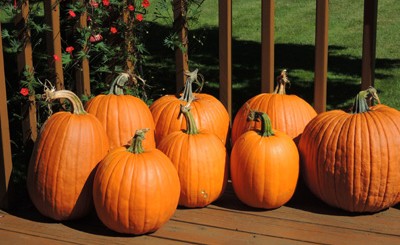
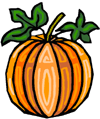
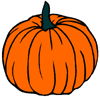
Stem – The stem is often referred to as the “Handle”. Located on the very top of the pumpkin. During the growing cycle, the stem is green. As the fruit ripens, it turns brown to brownish green, and slightly curved. During the growing season, the stem is attached to the vine. It is the umbilical cord, bringing nutrients to grow the fruit. For the Fall and Halloween seasons, the stem gives the pumpkin “Character”.
Caution: Be careful not to lift it by its “handle”. The handle breaks easily.
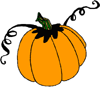
Tendril – Thin, hair-like “tendrils” are attached to the stem and along the vine. During the growing season, these tendrils are green. They twist around fences, posts, and even other plants. And they also cling to objects on the ground. The tendrils help anchor the vine and protect it from the wind. Dry, brown tendrils are located on the vine, and not the stem. However, people in the art world often draw the tendrils on the stem to give the pumpkin character. The resulting picture is more artistic. So, no one complains about the incorrect characterization.
Leaves – The plant’s leaves absorb energy from the sun for plant and fruit growth. They grow along the vine. However, the leaves do not grow on the stem, or on top of the fruit. Artist’s rendering of Fall pumpkins often has a few small, green leaves sitting atop the fruit and attached to the stem. Also, the leaves are actually much larger than depicted in these artistic pictures. If you remove a leaf from the vine, those green leaves cannot remain fresh and green for long. That is to say, those leaves would be brown.
Most People Never Think about the Number of Pumpkin Parts
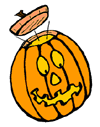
The Lid – Cut around the stem of your pumpkin to open it up for gutting and carving. Then, this top becomes the “lid”.
Ribs – Look at the outside of a pumpkin. Indented ridges run from top to bottom of the fruit. These are the pumpkin’s ribs. Sometimes, they are shallow. Sometimes, they are very deep. They add depth to the appearance of the fruit, and a lot of artistic character. Which do you prefer, deep or shallow ribs?
Even More Parts
Pumpkin Shell – This refers to both the outer skin and the pulp of the fruit. It includes the skin and the pulp.
Skin – The skin is the thin, shiny, orange outer layer of a pumpkin. It is sometimes called the “rind”. The skin is a protective layer, which keeps insects and diseases out of the fruit. It is not edible. But, it won’t make you sick if you eat it. It just doesn’t taste good or have a pleasurable texture.
Pulp – Also called “meat”. This is the yummy part of the pumpkin that you use to cook with and to make literally hundreds of tasty recipes and treats. You can use pumpkin in everything from main courses to desserts, ice cream, and even beer! See our cookbook for recipes.
Blossom End – When the fruit is very young, a flower blossom is attached to the end of the baby fruit (on its bottom). This is the blossom end. Pollen from a male flower pollinates the female flower and the fruit then develops. The flower dies, off, leaving a scar in its place. The blossom end is also called the pumpkin’s belly button.
Cavity – This is the inside of a pumpkin. After removing the “guts”, it’s just an empty cavity. On Halloween night, we carve the pumpkin and place a candle inside the cavity to light up the pumpkin and make it glow!
And Even More Parts !!!
Brains – Okay, the proper name for this icky stuff is fibrous strands and seeds. However, just about everyone calls them “pumpkin brains”. And a few people call them “guts”. There are many other names for this slimy, mushy, mass of strings and seeds. These also include sinew, goop, goo, pumpkin slime, and just plain old “yucky stuff”.
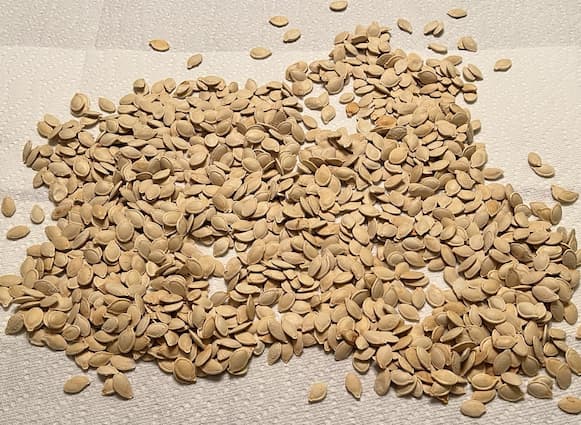
Seeds – Seeds are the beginning of next year’s pumpkin plants. Do you remember the old saying “Which came first, the pumpkin or the seed?” Pumpkin seeds are a delicious and nutritious snack. A pumpkin has hundreds of seeds.
Seed Coat – also called “seed jacket” or “seed shell”. It is the outer layer of the seed. Nature provides this coat, to protect the nut or “seed germ” inside, that will eventually emerge into a new plant.
Nut – The nut, technically called “germ”, is inside the seed shell. It eventually develops into a new plant. When you plant a seed and water it, moisture penetrates through the seed coat. Moisture and warmth trigger the new pumpkin seedling to grow and emerge from under the soil.
Recipes for Fall Cooking and Baking
Here are some of the biggest and best recipe collections on the Internet:
Pumpkin Recipes – Indeed, over 155 recipes and still growing.