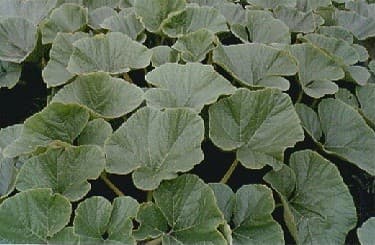
Early in the season, pumpkin plants grow rapidly with little or no problems. Then, summer heat and humidity brings the threat of all sorts of plant disease problems. And, hordes of insects show up to help spread diseases from plant to plant. Obviously, pumpkin plant disease and other problems can be devastating. It can spell an early and unsuccessful growing season just as the fruit is beginning to grow on the vine and take on weight.
When it comes to diseases, such a powdery mildew, the old saying “An ounce of prevention is worth a pound of cure” is absolutely true. So, let’s explore the causes, cures, and ways to avoid powdery mildew and other common pumpkin plant diseases.
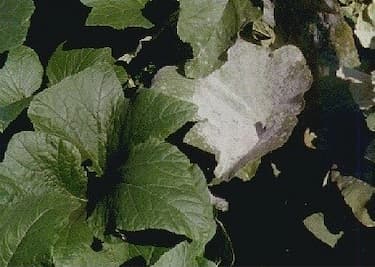
One of the two major threats to your prize pumpkin, is plant disease. The second problem is those Pesky Bugs. There is more than a casual relationship between insects and plant disease. Insects are often carriers of disease spores. Cucumber beetles, for example are notorious carriers of disease. Powdery mildew, a white powder-like bacteria (pictured above), is the most common disease problem. Powdery mildew thrives in hot, humid weather, just as your pumpkin is really getting big. Plant disease spreads rapidly, and will quickly kill the plant. This problem is common to many vining plants, from cucumbers to squash of all kinds.
A second disease is Bacterial Wilt. This disease is evident by a wilting and browning of the leaves. Sometimes the leaves will firm up at the end of the day, only to repeat itself the next morning, and get worse each time. This can sometimes be confused, with wilting due to lack of water or high temperatures. Wilting from lack of water results from either a literal lack of water in the soil or the vine ends not getting enough water as the fruit is sucking up all the nutrients. The acid test for bacterial wilt is to take one leaf and cut it an inch or so from the vine. If the sap that drains out is yellow and stringy, you have confirmed the presence of Bacterial Wilt disease.
There is no known cure for bacterial wilt, and the plant will certainly die. The best course of action, is to remove the diseased plant. Do not put it to your compost pile.
Refer to the saying at the top of this page: “An ounce of prevention is worth a pound of cure”. There is no cure for a pumpkin patch that has been overcome by Powdery Mildew or Bacterial Wilt. Therefore, the best defense is a good offense. Here are the best defensive measures to help minimize and avoid pumpkin plant disease problems.
Water only in the morning or during the day. Avoid late afternoon and evening. Powdery Mildew and other diseases thrive in humid weather. Watering at night adds fuel to the fire. When you water in the morning, the sun quickly dries the leaves. Watering at night leaves moisture on the leaves for the entire evening and early morning period. On warm nights, wet leaves are an ideal growing place for Powdery Mildew.
A friend of mine has a huge field where he grows pumpkins. His family has grown them and sold them in our town for generations. A few years ago, he told me how he had a disaster with his crop. The vines were shriveling and the leaves were turning white. He said he kept on watering them in hopes that they would grow back. The more he watered, the worse it became. I asked him about his watering technique. He said he waters with an overhead sprinkler at night. I then explained the impact of humidity on the disease, and that watering was only promoting it’s growth. Even though there is less evaporation of the water at night, it is not worth the risk of disease.
Water only to the roots and vines. If you apply water with a soaker hose, the leaves do not receive the additional moisture that promotes growth of diseases. Place the soaker hose facing down. This also minimizes water on the leaves.
First and foremost, practice pumpkin plant disease prevention. Avoiding any diseases is crucial to a highly successful crop. This translates to early and regular applications of fungicides.
First, apply sprays to control diseases before they get started. A fungicide disease spray can save your crop from this problem. Many of us want to avoid chemicals wherever possible, and that is obviously commendable. If you do not eat the pumpkins, you should have less concerns about applying fungicides. Start applying disease control sprays early and before disease occurs. If your pumpkin patch is already infested, apply it right away. If caught soon enough, the plants should recover. Although affected leaves will not look any better.
Plant disease can occur on the top and bottom of leaves, on the leaf stem and on the vines. Apply fungicide to all parts of the plant. Once plant disease gains a foothold, it may be hard to control.
Secondly, remove diseased leaves and plants from the garden. Do not turn diseased plants into the soil or compost them. Diseases can over-winter either in the soil or in your compost pile. It then re-infests this years’ crop. Compost piles sometimes do not get hot enough to kill bacterias. Toss diseased plants out in the trash. Or, send them to your local lawn waste recycling center. These steps help to minimize pumpkin plant disease.